Master the complete title search process through practical training, real-world examples, video instruction, and personal support.
Title searching is a specialized skill that real estate professionals, investors, and attorneys rely on every day.
Build a rewarding career in a niche field with strong demand. Title searchers are needed by title companies, attorneys, and investors across the country.
Run your own title search business from home. Set your own hours, choose your clients, and enjoy the freedom of being your own boss.
Work when and where you want. Title searching offers the flexibility to balance work with family, travel, or other pursuits.

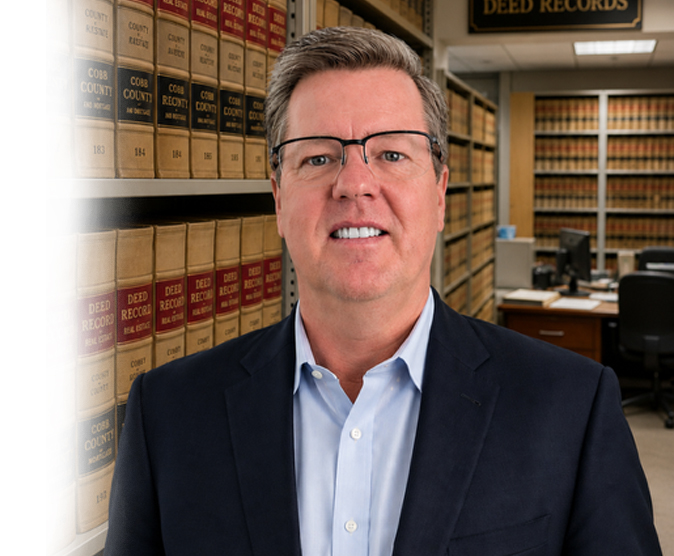
William Stephen has spent over four decades in the title industry, founding and operating a successful title company while training thousands of students to master the art of title searching. His practical, no-nonsense approach cuts through the complexity and gives you the real-world skills you need to succeed.
William Stephen
Founder & Instructor
Get instant access to our title searching courses, professional training materials, and instructor support — everything you need to launch your new career.

Professional Real Estate Title Searching & Abstracting Course Learn to Perform Residential and Co…
Introduction
History of Land Ownership
History of Land Review Questions
Legal Descriptions Used in The United States
Legal Descriptions Review Questions
Type of Deeds used in the United States
Types of Deeds Review Questions
Liens and Judgements
Liens and Judgements Review Questions
Plats
Plats Review Questions
Public Records Introduction
Public Records Review Questions
Tax Assessors Office
Tax Assessors Office Review Questions
Tax Commissioners Office
Tax Commissioners Office Review Questions
Grantee Process - Building the chain of title
Grantee Process - Review Questions
Grantor Process
Grantor Process Review Questions
Old Videos of the Title Search Procedure in the Courthouse FUN!
The Completed Title Search
Final Exam
Comprehensive written guide covering every aspect of title searching.
Watch detailed video tutorials that walk you through real title searches.
Enroll and access all course materials.
Learn from actual title search cases and examples.
Get answers to your questions as you work through the material.
Learn how to market your services and build your business.
Looking for a new career path with flexibility and strong earning potential.
Save money on title search fees and gain deeper insight before investing.
Earn income from home on your own schedule.
Supplement retirement income with a flexible, low-stress career.
The course is designed to take approximately 20-40 hours to complete all lessons and tests and required practice. However, if you aim to become a professional title abstractor, additional practice will be required. This involves spending several weeks working in the Deed Record Room and collaborating with your instructor to build confidence in the process.
Our team includes experienced title abstractors who are available to guide you through each step. One of the key benefits of our program is access to live assistance from a professional abstractor, ensuring you receive support whenever questions arise.
The online course is available for 1 year from your enrollment date. If you need additional time, please contact your instructor, as we are committed to ensuring your success. Additionally, our phone and email support are available indefinitely to assist you throughout your learning journey.
We offer free online and phone support throughout your training. If you have any questions or need clarification, simply email or call us, and we will walk you through the solution. This personalized assistance is included at no extra cost.
Yes, the information provided in this course is intended for educational purposes only and does not constitute legal or compliance advice. Due to variations in terminology and procedures across different states, the course content may not fully align with your state’s specific requirements.
We recommend consulting with a licensed attorney or compliance professional in your state for tailored advice. While we provide general training on state-to-state differences, we cannot guarantee that our procedures exactly match those used in your state.
If you have additional questions, feel free to contact us. We are here to support your learning and career development!
What is a real estate title search?
A real estate title search is an examination of public records relating to a particular parcel of real property.
A title search may be used to determine current ownership, establish a chain of title, and identify recorded documents or interests that may affect the property.
The exact scope and search period can vary depending on the jurisdiction, client requirements, property, and type of search being requested.
What is a chain of title?
A chain of title is the sequence of recorded transfers showing how ownership of a parcel of real estate passed from one owner to another.
A title abstractor may begin with the current owner and work backward through deeds and other public records to establish the property's ownership history for the period required by the assignment.
Learning how to build and verify a chain of title is an important part of our training.
How far back does a title search go?
There is no single search period that applies to every title search.
The required period may depend on the type of search, applicable law or title standards, the jurisdiction, and the client's requirements.
For example, a full title search may require substantially more historical research than an update or limited-owner search.
Our training explains different types of title searches and how to determine the appropriate scope based on the assignment.
Do title abstractors still need to know how courthouse records work?
Yes.
Even when records are available online, understanding how records are created, recorded, indexed, and maintained is extremely important.
Learning the underlying public-record system helps an abstractor recognize missing documents, indexing issues, incomplete online records, and situations requiring additional research.
Our training includes real-world instruction designed to help students understand the connection between traditional courthouse records and today's online public-record systems.
Questions About Becoming a Title Abstractor
Do I need previous real estate experience?
No previous title-searching experience is required to begin our course.
The training is designed to introduce the public-record system and then progressively teach the documents, terminology, research methods, and procedures involved in performing a title search.
Students with previous real estate, legal, mortgage, investing, or title experience may recognize some of the terminology, but prior experience is not required.
Can I work independently as a title abstractor?
Independent title abstracting is one way people may provide title-searching services.
Independent abstractors may provide research services to title companies, attorneys, investors, and other clients depending on their experience, location, qualifications, and client requirements.
Our training includes information about the practical considerations involved in establishing an independent title abstracting business and developing professional relationships with potential clients.
Who hires title abstractors?
Depending on the market and type of work, title abstractors may perform research for organizations such as:
Title companies
Real estate attorneys
Law firms
Abstracting companies
Real estate investors
Lenders and related service providers
Property research companies
Other organizations requiring real estate public-record research
Employment and independent-contractor opportunities vary by location, experience, qualifications, and market conditions.
Do I need Errors & Omissions insurance?
Errors & Omissions insurance, commonly called E&O insurance, may be required by certain clients or organizations before they will assign work to an independent abstractor.
Requirements vary depending upon the client, jurisdiction, contractual relationship, and type of services being provided.
Students planning to work independently should investigate appropriate insurance coverage for their particular business and circumstances.
How many modules are included in the course?
Our current Real Estate Title Searching & Title Abstracting Course contains 38 instructional modules covering the title-searching process from fundamental public-record research through more advanced title-searching subjects.
The curriculum includes deeds, legal descriptions, chains of title, mortgages and releases, liens, judgments, probate, plats, easements, restrictive covenants, residential and commercial searching, reporting results, and other subjects related to professional title research.
Please review our current Course Curriculum page for a complete description of the training.
Does the course include real-world examples?
Yes.
Our training incorporates practical examples, recorded documents, title-searching exercises, demonstrations, and real-world procedures.
We believe students learn title searching more effectively when they understand how deeds, mortgages, liens, probate records, plats, easements, and other records actually appear and connect during a search.
Will I learn how to research deeds and legal descriptions?
Yes.
Students learn about different types of deeds, grantors and grantees, vesting, conveyances, and the role deeds play in establishing ownership and building a chain of title.
The training also addresses common forms of legal descriptions, including Lot & Block, Metes & Bounds, and Public Land Survey System descriptions.
Does the course cover probate?
Yes.
Probate can become important when property ownership involves a deceased owner or an estate.
Our training introduces students to probate-related research and documents that may affect ownership and the chain of title.
Can I ask an instructor questions?
Yes. Personal assistance is one of the most important features of our training.
Real-world title searches do not always follow textbook examples.
You may eventually encounter a deed that doesn't make sense, an apparent break in the chain of title, a mortgage without an obvious release, a probate issue, an unusual legal description, or another record you haven't encountered before.
Students may contact us by phone or email with questions concerning their training and title-searching concepts.
If you have a question, ask us. Title searching is what we do
How long do I have access to the online course?
Students receive 1 year of online course access from the date of enrollment.
We recommend beginning the course promptly and working through the material consistently.
If circumstances prevent you from completing the course within the access period, contact us to discuss whether additional access may be available.
Will I receive a certificate when I finish the course?
Yes.
Students who successfully complete the applicable course requirements can receive a Certificate of Completion for their records.
The Certificate of Completion documents completion of our educational program. It is not a state-issued professional license or governmental certification.
What is your refund policy?
Course purchases are non-refundable except where otherwise required by applicable law.
Because students receive access to proprietary digital educational materials, lessons, videos, manuals, and other course content after enrollment, all course sales are considered final.
We strongly encourage prospective students to review the course description, curriculum, FAQs, and Terms and Conditions before purchasing.
If you have questions about whether the course is appropriate for you, please contact us before enrolling.
Yes, upon successfully completing the course, you will be able to print a Certificate of Completion for your records.
1. If you plan to work as an independent abstractor, you will need to obtain errors and omissions insurance.
2. If you work for a title company or attorney, you will typically be covered under their policy.
We can recommend reputable companies to help you secure the appropriate insurance.
As this is an educational course, no refunds are offered for any reason.
What is a real estate title abstractor?
A real estate title abstractor, sometimes called a title searcher, researches public records relating to real property.
Depending on the type and scope of the assignment, an abstractor may research deeds, mortgages, releases and satisfactions, liens, judgments, probate records, easements, plats, restrictive covenants, tax records, and other documents that may affect a parcel of real estate.
An important part of title abstracting is understanding how these documents relate to one another and how ownership of a property has transferred over time.
What does a title abstractor actually do?
A title abstractor researches and reports information contained in public records.
A typical assignment may involve identifying the property and current owner, locating deeds, following the chain of title, researching mortgages and releases, searching for liens and judgments, reviewing probate records when applicable, examining plats and easements, checking tax information, and preparing the results for the client.
Professional title searching requires more than simply locating documents. The abstractor must understand what to search, where to search, how the records connect, and when additional research may be necessary.
What records does a title abstractor search?
Depending on the assignment and jurisdiction, a title search may involve researching:
Deeds and conveyances
Mortgages and deeds of trust
Assignments
Releases, satisfactions, and cancellations
Judgments
Federal and state tax liens
Mechanics liens
Probate and estate records
Easements and rights-of-way
Restrictive covenants
Subdivision plats
Property tax records
Tax assessor records
Foreclosure-related documents
Homeowners association-related records
Other recorded documents affecting the property
The exact records required depend on the jurisdiction and the client's search instructions.
Can real estate title searches be performed online?
Many counties now provide substantial portions of their land and public records online, making it possible to perform many searches remotely.
However, record availability varies considerably between jurisdictions. Some records may not be digitized, older records may require additional research, and online indexing systems can differ from county to county.
For that reason, a professional abstractor needs to understand the records themselves—not simply how to use one particular website.
Our training addresses both online research and traditional courthouse/public-record research principles.
What is the difference between a title abstractor, title searcher, and title examiner?
The terms can sometimes overlap, and their meaning may vary by employer or jurisdiction.
Generally, a title abstractor or title searcher researches public records and reports documents and information affecting a property.
A title examiner may perform additional analysis of the search results to determine the condition of title or identify title requirements, depending on the employer, jurisdiction, and transaction.
Our course focuses primarily on teaching the research and title abstracting process rather than providing legal opinions regarding title.
Do I need a license to become a title abstractor?
Licensing and occupational requirements can vary by state, jurisdiction, employer, and the services being performed.
A title abstractor should determine the specific requirements applicable to the state or jurisdiction where the work will be performed.
Our course provides educational training in title-searching principles and procedures. It does not itself constitute a state license or governmental certification.
Can a title abstractor work from home?
Many public records are now available online, which can make remote title research possible in some jurisdictions.
However, the ability to perform a complete search remotely depends upon the availability and completeness of the public records for the particular county or jurisdiction.
Some assignments may still require courthouse or other in-person research.
Does the course teach me how to find clients?
Our training includes information about the business side of independent title abstracting, including identifying potential clients, approaching attorneys and title companies, understanding client expectations, and developing professional relationships.
We cannot guarantee employment, clients, assignments, income, or business success.
How long does the course take?
Students should generally allow approximately 20–40 hours to complete the online lessons, tests, exercises, and required practice.
However, completing the online course is only part of learning professional title searching.
Students who intend to perform title searches professionally should expect to spend additional time practicing the procedures they have learned. Developing confidence in researching public records, building chains of title, and working through unusual situations comes through practice.
We encourage students to continue practicing title searches and to contact us when questions arise.
Will I actually learn how to perform a title search?
That is the primary objective of our training.
There is an important difference between learning definitions related to title searching and learning how to perform the search itself.
Our training is designed to teach you where to begin, how to identify the current owner, how to locate deeds, how to establish the chain of title, how to research mortgages and releases, how to search for liens and judgments, when additional records may need to be researched, and how to organize your findings.
We don't simply want you to learn about title searching. We want you to understand how to DO a title search.
Does the course teach both residential and commercial title searching?
Yes. The course addresses principles and procedures applicable to both residential and commercial title research.
The exact scope of any professional assignment will depend upon the property, jurisdiction, and client's instructions.
Does the course cover mortgages, liens, and judgments?
Yes.
The curriculum includes instruction involving mortgages and other security instruments, assignments, releases and satisfactions, judgments, tax liens, mechanics liens, and other records that may affect real property.
Students also learn why simply finding a document isn't enough—the abstractor must determine how it relates to the property, parties, and search being performed.
Will I receive a course manual?
Yes. there is a FREE 161 page download course manual and workbook.
Also, you have available at an additional cost our published 500 page course textbook which can be downloaded or you can receive a soft cover or hard cover copy. This will be available when you register as an option.
Course study materials are provided as part of the training. These materials are designed to reinforce the concepts and procedures.
Is instructor assistance included in the course price?
Yes. Student assistance relating to the course and title-searching concepts is included with the training at no additional charge, subject to our reasonable availability and support policies.
Is phone and email assistance available after my online course access expires?
We want our students to be able to ask questions as they continue developing their title-searching skills.
Support relating to title-searching concepts may continue after the initial online course-access period, subject to reasonable availability and our current support policies.
Course-platform access and instructor support are separate benefits; expiration of online course access does not necessarily mean that you can never contact us with a title-searching question.
Is This Course Legal Advice?
No.
Important Educational Disclaimer
The information provided through LearnTitleSearching.com is intended for educational and training purposes only and does not constitute legal advice, a legal opinion, title insurance advice, or professional representation regarding any particular real estate transaction.
Real estate laws, recording practices, terminology, licensing requirements, search standards, public-record systems, and procedures vary between states and jurisdictions and can change over time.
The course teaches title-searching principles and procedures, but students are responsible for determining the requirements applicable to their jurisdiction, employer, client, and individual assignments.
When legal advice or interpretation is required, consult a qualified attorney licensed in the applicable jurisdiction.