Why Remote Title Research Is Growing in 2026
Table of Contents
- 1. Remote Work Statistics in 2026: The Numbers Behind the Shift
- 2. How Digital Transformation Changed Remote Title Research
- 3. Title Examiner Jobs: Why Employers Are Hiring Remotely
- 4. How to Become a Title Researcher in 2026
- 5. Real Estate Title Research Tools Powering the Remote Shift
- 6. Salary Benchmarks and Career Growth for Remote Title Examiners
- 7. What Slows Remote Title Research Down (And What to Ignore)
- Frequently Asked Questions
Last Updated: Sep 17, 2026
1. Remote Work Statistics in 2026: The Numbers Behind the Shift
Remote title research is growing in 2026 because the work itself never required a physical office. A title search means pulling property records, reviewing deeds, checking encumbrances, and verifying chain of title. Every one of those tasks now happens through a browser.
At Learn Title Searching, we've watched this shift accelerate for years. The tools caught up, the records went digital, and employers stopped pretending the cubicle mattered.
The broader labor market confirms the direction. According to the Bureau of Labor Statistics' occupational outlook data, demand for title examiners and abstractors remains steady even as traditional office roles contract. Remote job postings across insurance and real estate services keep climbing.
What's driving it:
- County records digitized and searchable online
- Cloud-based title platforms replacing desktop software
- Employers cutting office overhead in a tight real estate market
- Workers demanding flexible work arrangements as a baseline
The old model assumed title work needed a physical office and a filing room. That assumption is gone.
2. How Digital Transformation Changed Remote Title Research
Digital transformation turned title examination from a records-room job into a screen-based one. County clerks now publish deeds, mortgages, and liens through online portals, and title researchers pull those documents without leaving a desk.
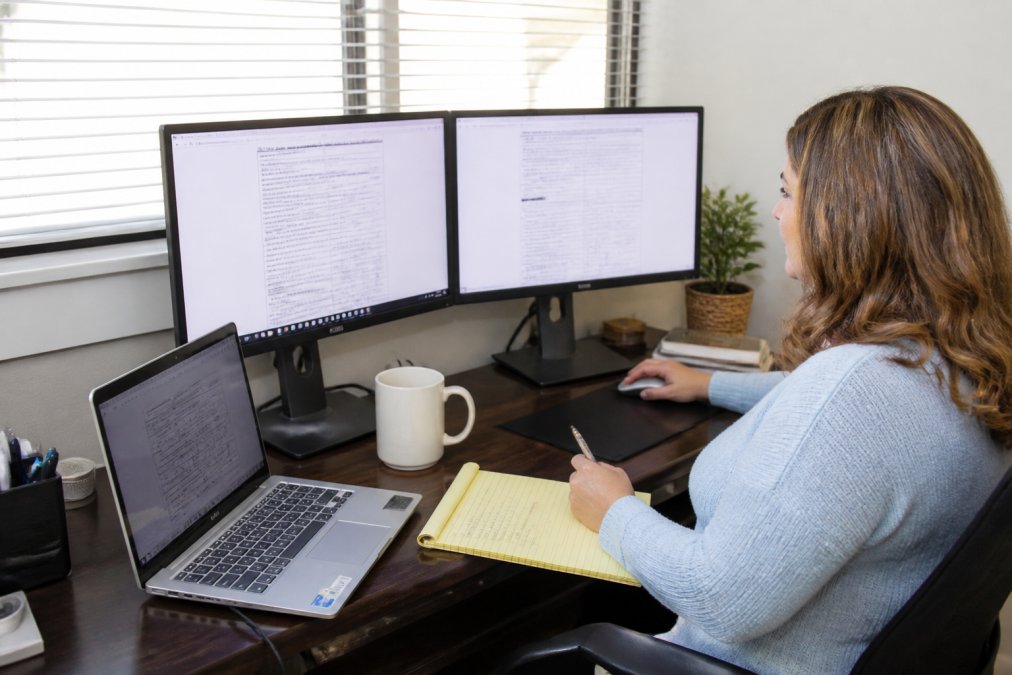
A title researcher working from home at a desk with dual monitors displaying property records and a laptop showing a cloud-based title search platform, with a notepad and coffee nearby
This is the single biggest reason remote title research works now. Twenty years ago, a title search meant driving to a courthouse, pulling physical books, and photocopying pages. Today, most of that happens through public records access portals and subscription databases.
The practical effects:
- Deed analysis happens on screen with searchable PDFs
- Encumbrance checks pull from live municipal databases
- Document verification runs through cloud-based platforms
- Workflow automation flags missing links in the chain of title
The work is still meticulous. It's just no longer tied to a building.
3. Title Examiner Jobs: Why Employers Are Hiring Remotely
Title examiner jobs have gone remote because the talent pool is national, not local. A title company in one state can hire a skilled examiner three time zones away and get the same output without paying for office space.
The math is simple. Employers save on rent, utilities, and equipment. Researchers get flexible work arrangements and skip the commute. Turnover rates drop when people can work from home.
What employers actually want:
- Accuracy in title search and deed analysis
- Familiarity with legal compliance and industry regulation
- Comfort with data entry and document verification at volume
- Self-discipline to hit deadlines without supervision
The catch is that remote hiring raises the bar on trust. Employers can't watch you work, so they screen harder for proven skills. That's why formal training matters more than ever in this market.
4. How to Become a Title Researcher in 2026
Learning how to become a title researcher in 2026 starts with structured training, not trial and error. There's no universal license for title examiners, so employers judge you on demonstrated skill.
Here's the path most successful researchers follow:
- Learn the fundamentals. Chain of title, deeds, mortgages, liens, easements, and encumbrances.
- Train on real records. Practice on actual county portals, not hypotheticals.
- Master the tools. Get comfortable with cloud-based title platforms and search databases.
- Build a portfolio. Document searches you've completed, even practice ones.
- Apply or go independent. Work for a title company first, or start your own business.
This is where Learn Title Searching fits. Our courses are built on 40+ years in the title industry, and the instructor authored the leading training manual in the field. You get real-world title search training and personal instructor support, not just pre-recorded videos.
5. Real Estate Title Research Tools Powering the Remote Shift
Real estate title research tools are the infrastructure that makes remote work possible. Without them, no amount of flexibility would matter.
The core toolkit:
| Tool Category | What It Does | Why It Matters Remotely |
|---|---|---|
| Public records portals | Access deeds, liens, mortgages | Replaces courthouse visits |
| Title search platforms | Organize and verify chain of title | Centralizes the workflow |
| Document management | Store and share PDFs securely | Enables virtual collaboration |
| Verification databases | Cross-check ownership and encumbrances | Catches errors before closing |
Most researchers use a mix of county portals, subscription databases, and a title production platform. The specific tools vary by state and employer.
Key TakeawayThe tool doesn't make the researcher. A skilled examiner can produce a clean title search with nothing but county portals and patience. Tools speed up the work; they don't replace the judgment behind it.6. Salary Benchmarks and Career Growth for Remote Title Examiners
Salary benchmarks for remote title examiners vary widely by experience, state, and whether you work for a company or run your own business. Entry-level researchers typically earn less than seasoned examiners, and independent contractors can out-earn salaried employees once they build a client base.
Career growth follows a predictable arc:
- Entry level: Data entry, document verification, basic searches
- Mid level: Full title searches, complex chains, client communication
- Senior level: Review, quality control, training others
- Business owner: Independent title search company with your own clients
The remote angle expands opportunity. You're not limited to employers in your city. A researcher in a rural area can serve title companies in major metros.
According to the National Association of Insurance Commissioners, title insurance remains a regulated industry with consistent demand, which keeps examiner roles stable even when the real estate market cools.
7. What Slows Remote Title Research Down (And What to Ignore)
Two things genuinely slow remote title research: bad records and weak infrastructure. Everything else is noise.
Real obstacles:
- Counties with incomplete or poorly indexed digitized records
- Slow public records access portals that time out mid-search
- Cybersecurity and data privacy requirements that demand secure handling of sensitive documents
- Spotty internet or outdated equipment on the researcher's end
What to ignore:
- Claims that remote workers are less productive (productivity metrics don't support it)
- Fear that remote work kills career growth (it expands your options)
- The idea that you need to live near a title company to get hired
Data privacy is the one obstacle worth taking seriously. Title research involves sensitive property and personal information, so remote researchers need secure connections, encrypted file storage, and clean document handling habits. Employers screen for this.
Pro TipSet up a dedicated work device and a password manager before you take your first remote contract. Title companies ask about your data handling practices, and a confident answer wins work.Remote title research keeps growing because the work fits the format. The records are digital, the tools are cloud-based, and employers have stopped requiring a physical office. What's left is the skills gap: too many openings, not enough trained researchers. Learn Title Searching closes that gap with courses built on 40+ years in the title industry, real-world title search training, and personal instructor support from an expert who wrote the leading training manual. You learn at your own pace and graduate ready for a work-from-home career. Enroll Now and start building the skills that employers are hiring for right now.
Frequently Asked Questions
What does a remote title researcher do?
A remote title researcher examines property records to confirm ownership history, identify encumbrances like liens or easements, and verify legal compliance before a real estate transaction closes. Working from home, they access county records through cloud-based platforms and public records databases, perform deed analysis, and compile title reports. Their work supports title insurance underwriting and helps ensure clean property transfers. Most remote title researchers handle document verification, title search requests, and data entry from their home office, communicating with clients and underwriters through virtual collaboration tools.
Is remote title research a stable career path in 2026?
Yes. The shift to remote work in title research is driven by structural changes, not temporary trends. County records digitization, cloud-based platforms, and workflow automation have made remote title examination practical and efficient. The real estate market continues to generate steady demand for title search work, and title insurance remains a required part of most property transactions. Employers are also embracing hybrid work models and flexible work arrangements to retain talent and reduce turnover rates, making remote title examiner jobs a durable option for people seeking a work-from-home career with growth potential.
What skills are required to become a remote title examiner?
Remote title examiners need a mix of research skills, attention to detail, and comfort with technology. Key skills include reading and interpreting property records, understanding encumbrances and deed analysis, and navigating public records access systems. Familiarity with real estate title research tools and cloud-based platforms is important. Strong written communication helps when documenting findings and working with clients remotely. Many people enter the field without a real estate background, learning through structured training programs that cover title search fundamentals, legal compliance, and practical workflow. Self-discipline and time management matter for work-from-home success.
How has technology changed the title research industry?
Technology has reshaped title research from a paper-based, in-person process to a digital, location-independent workflow. Digital transformation of county records means many property documents are now accessible online, reducing the need to visit courthouses. Cloud-based platforms let title researchers access records, run title searches, and submit reports from anywhere. Workflow automation handles repetitive data entry and document verification tasks, freeing examiners to focus on analysis. Cybersecurity and data privacy measures have also become essential as sensitive property records move online, requiring remote workers to follow strict security protocols.
Enroll Now
0 Comments