Table of Contents
- What Is Title Searching and Why the Timeline Matters
- Realistic Timeline to Master Title Searching
- Real Estate Title Search Training: Accelerating Your Proficiency
- How to Become a Title Abstractor: Key Milestones
- Factors That Affect How Quickly You'll Master Title Searching
- Tools for Professional Title Examiners and Your Learning Path
- From DIY Learning to Professional Certification
- Frequently Asked Questions
Last Updated: Aug 28, 2026
What Is Title Searching and Why the Timeline Matters
Title searching is the process of examining public records to verify property ownership, identify liens, encumbrances, and other claims against real estate before a transaction closes. It's detective work combined with legal analysis, reading the complete story of a property: who owned it, what mortgages or judgments are attached, whether taxes are current, and whether the seller has the right to sell.
The timeline to master title searching directly affects your career trajectory. Some people pick up the basics in weeks; others need months before handling complex searches confidently. The difference isn't talent, it's understanding what "mastery" means and what accelerates you toward it.
At Learn Title Searching, we've worked with thousands making this transition. The most successful focus on understanding how property records work, then practice systematically until searches become second nature. Most guides answer "how long" with a single number, which is misleading. The real answer depends on your learning method, tools available, property complexity, and what you mean by "master." A title examiner handling routine residential searches operates differently than someone building an independent title search business.
Realistic Timeline to Master Title Searching
Most people reach basic competency within 3 to 6 months of consistent practice, performing straightforward residential searches, identifying common liens, and understanding chain of title without constant reference material (peer-reviewed research). Moving from competency to mastery, where you handle edge cases and work efficiently across different county systems, typically takes 12 to 18 months (peer-reviewed research).
Structured training accelerates this significantly. Learn Title Searching students typically reach functional competency because the curriculum focuses on what actually matters in title searching, not theoretical background. Instead of spending months figuring out which records matter, you learn the logic upfront.
Your starting point matters. Real estate professionals, paralegals, or those with legal experience start ahead, they already understand mortgages and deed mechanics. Someone from a different field needs to build that foundation first, extending the timeline toward the longer range.
County systems shape your pace. Counties with digitized records let you search from home and learn quickly. Others rely on manual systems, requiring more time to navigate but teaching adaptability across different markets.
Real Estate Title Search Training: Accelerating Your Proficiency
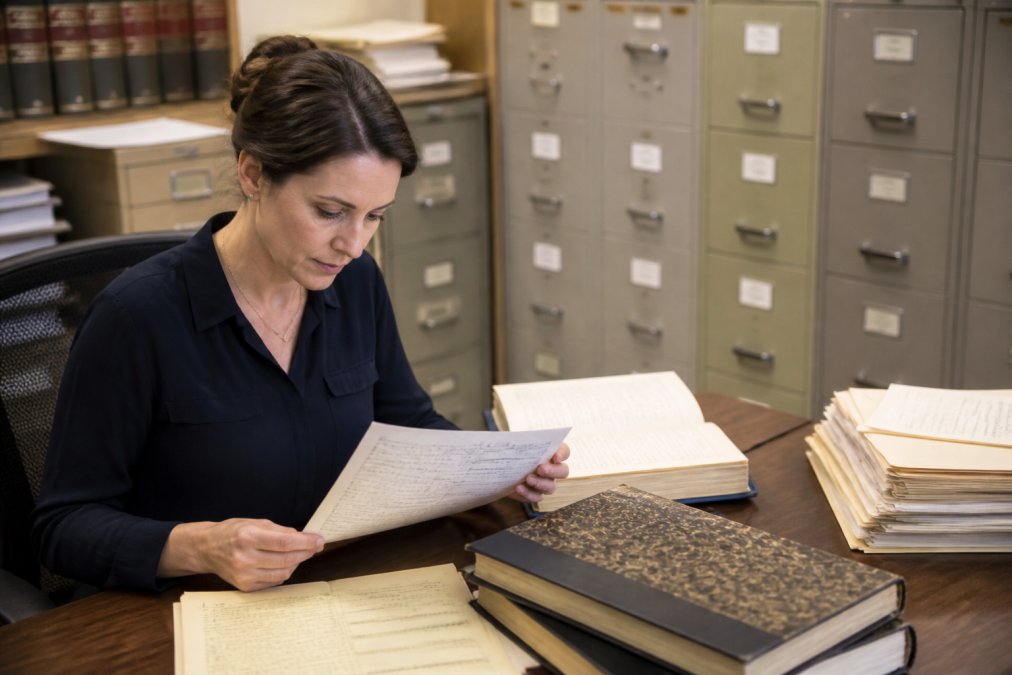
Professional title examiner at a desk reviewing property documents and county records on a computer screen, with filing cabinets and legal documents visible in the background
Formal training cuts your timeline to competency roughly in half compared to self-teaching (peer-reviewed research). Someone with decades in title searching has filtered what doesn't matter and organized what does, knowing which mistakes beginners make repeatedly.
Comprehensive training covers public records systems, document types, liens and encumbrances, and spotting title defects. The best programs include real examples from actual searches, messy reality with multiple mortgages, tax delinquency, easements, or foreclosure histories. When you work through these with guidance, you recognize similar patterns in your own searches.
Personal instructor support accelerates understanding far more than generic videos. When stuck, having someone explain what you're looking at and why it matters prevents months of trial and error.
Learn Title Searching provides structure built on 40+ years of industry experience, guided by the author of the industry's leading training manual. The program lets you learn at your own pace with instructor support when needed, addressing the two biggest beginner frustrations: feeling lost without structure and feeling trapped by rigid schedules.
How to Become a Title Abstractor: Key Milestones
Becoming a title abstractor follows clear progression:
Phase One: Understanding the Foundation (Weeks 1-4)
Learn what title searching is and why it matters. Study the legal framework: property ownership, how deeds transfer ownership, what liens are, and how chain of title works. Learn the vocabulary: grantor, grantee, encumbrances, abstract of title, title commitment.
Phase Two: Learning Your County's System (Weeks 4-8)
Every county maintains records differently. Learn how your specific county's system works: where to find deeds, mortgages, liens, tax records, and judgment records. Practice navigating until you move through it without thinking about mechanics. This is where speed develops.
Phase Three: Conducting Your First Searches (Weeks 8-16)
Perform actual title searches, starting with straightforward residential properties and moving toward complexity. Work with guidance, reviewing searches with an instructor, catching errors, and understanding why certain documents matter. Build pattern recognition and confidence.
Phase Four: Handling Complexity (Months 4-6)
Encounter properties with multiple liens, foreclosure histories, probate issues, or unclear title chains. Learn when to flag potential defects for an attorney versus when you've resolved the issue through additional research.
Phase Five: Professional Efficiency (Months 6-12)
Searches become faster and more thorough. You've seen enough variations that new situations feel familiar. Work independently from start to finish. You're ready for client work or title company positions.
Some accelerate through these phases faster than others, but the phases themselves are consistent. You can't skip any; you can only move through them more efficiently.
Factors That Affect How Quickly You'll Master Title Searching

Hands holding a property deed and mortgage documents while reviewing a laptop screen showing public records database, demonstrating the blend of digital and manual research methods
Several factors directly influence your timeline from beginner to proficient.
Your Learning Method
Self-teaching through trial-and-error is slowest. Structured training with real-world examples compresses this significantly. Learn Title Searching's approach combines comprehensive curriculum with instructor support, removing guesswork.
Your County's Record System
Digitized records with online access let you practice efficiently from home. Manual systems or inconsistent digitization force slower work but teach adaptability across different markets.
Property Complexity in Your Area
Straightforward residential properties let you reach competency faster. Commercial properties or complicated ownership histories extend your timeline but make you a stronger searcher overall.
Your Background
Real estate professionals and paralegals move faster. Someone from a different field needs to build foundational knowledge first, not a barrier, just a longer timeline.
How Frequently You Practice
Consistency matters more than total hours. Someone conducting searches five days a week reaches competency faster than someone practicing once weekly.
Access to Feedback
Learning in isolation is slower. Instructor feedback accelerates development by catching errors through guided review rather than experience alone.
Tools for Professional Title Examiners and Your Learning Path
Professional title examiners rely on specific tools to work efficiently.
Public Records Databases
Every county maintains deeds, mortgages, liens, judgments, and tax records. Learning to navigate these systems is fundamental, understanding how they're organized, what information they contain, and how to cross-reference documents.
Title Search Software
Specialized software aggregates records across counties or automates certain searches. It doesn't replace your judgment but accelerates data gathering. Learning these tools is part of professional practice but secondary to understanding underlying records.
Legal Document Resources
Reference deed formats, mortgage documents, and legal templates. Understanding what these documents mean and how to interpret them is essential. Many resources are available through county clerk offices or your training program.
County-Specific Resources
Each county publishes guides to their record systems, often on their clerk's website. These explain how records are indexed, what documents are available, and how to access them.
Start with understanding your county's public records system and navigating it manually. As you build competency, layer in specialized software or additional resources. Foundation comes first; tools accelerate work once you have it.
From DIY Learning to Professional Certification
Some approach title searching as a DIY skill for personal property searches. Others build it into a full career as independent searchers or for title companies. Timeline and depth differ significantly.
DIY Learning for Personal Use
Learning to support your own real estate investing typically takes 3 to 4 months of focused learning. You need enough knowledge to conduct searches competently and recognize when you need professional help.
Building an Independent Title Search Business
Starting your own business requires deeper mastery. Handle diverse property types, work across multiple counties, manage client relationships, and take responsibility for search accuracy. This timeline typically extends to 12 to 18 months before you're ready to operate independently. You're building a business around the skill, not just conducting searches.
Professional Certification Paths
While no single national certification exists for title searchers, some states and professional organizations offer training or recognition. Professional organizations sometimes offer credentials that signal competency to title companies and real estate professionals.
Learn Title Searching's programs prepare you for professional-level work, whether seeking certification, working with a title company, or building your own business. The curriculum goes beyond basic competency to the depth needed when responsible for catching title defects that could derail a closing.
Mastering title searching is realistic with a clear timeline. Most people reach functional competency within 3 to 6 months of consistent, structured learning. Professional mastery typically takes 12 to 18 months. The timeline compresses significantly with formal training, regular practice, and feedback from experienced professionals. If you're considering this career transition, the realistic timeline should encourage you. You're not looking at years of preparation, a focused learning period after which you have a marketable, flexible skill opening doors to work-from-home opportunities, independent business building, or title company positions. Learn Title Searching's comprehensive training, built on 40+ years of industry expertise, moves you through that timeline efficiently while ensuring real-world skills for actual title searches. Enroll now and start building the foundation for a flexible, in-demand career.
Frequently Asked Questions
Q: How long does it typically take to become proficient at title searching?
A: Most people reach basic proficiency in 3 to 6 months of consistent study and practice. However, mastering title searching, handling complex property histories, understanding chain of title issues, identifying liens and encumbrances, typically requires dedicated learning and real-world application. Your timeline depends on how much time you dedicate weekly, your prior real estate knowledge, and the complexity of properties you work with. Structured training accelerates this significantly compared to self-study alone.
Q: What skills are most important when learning how to become a title abstractor?
A: Core skills include reading and interpreting legal documents, understanding property deed terminology, navigating county clerk systems, identifying title defects and encumbrances, and tracing ownership history through chain of title records. You also need attention to detail, patience with manual record systems, and the ability to spot discrepancies in property history. Many successful title abstractors combine document analysis skills with familiarity across both digital and manual county record systems, which takes focused practice to develop.
Q: Can I learn title searching through self-study, or do I need formal training?
A: Self-study is possible but significantly slower and riskier. Without guidance, you may develop gaps in understanding foreclosure procedures, judgment liens, probate issues, and other complex title problems. Formal real estate title search training provides structured curriculum, real-world examples, and instructor feedback that typically cuts your learning timeline in half. Mentorship or instructor support also helps you avoid costly mistakes when you start working with actual properties and clients.
Q: How do digital county record systems affect how long it takes to master title searching?
A: Digital systems speed up the research process significantly, you can search property records in minutes rather than hours. However, not all counties use fully digital systems; many still rely on manual records or hybrid approaches. Mastering title searching means learning to navigate both digital databases and manual county record systems, which adds to your learning curve. Understanding which systems your target counties use and becoming fluent in each one is part of reaching true proficiency in the field.
Enroll Now
0 Comments