
7 Key Differences: Title Search vs Title Examination
WSWilliam Stephen· Author/Instructor
Last Updated: Nov 14, 2026
Quick Summary
A title search gathers and organizes public records into a chain of title, while a title examination is the professional review of those records that decides whether the title is clear enough to transfer. The searcher reports what exists; the examiner judges risk and issues a signed conclusion.
- A title search produces an abstract of title: document copies, chain of title, legal description, encumbrance list, and gap notes.
- A title examination issues a title opinion stating clear, defective, or clear with conditions, naming each defect and its cure.
- A title search usually takes a few business days for a simple residential parcel and longer for commercial property or a broken chain.
- To search yourself, start at the county recorder and work backward from the current deed using the parcel identifier or legal description.
- Title examination stops where the record stops, which is why title insurance exists as a separate underwriting step.
Ready to learn title searching?Learn real-world title search and examination skills from a 40-year industry expert.
Start Title Search Training
Table of Contents
- Title Search vs Title Examination: Two Steps, Not One
- What a Title Search Actually Produces
- What a Title Examination Actually Decides
- Side-by-Side: Scope, Deliverables, and Who Is Responsible
- How to Do a Title Search on Property Yourself
- How Long Does a Title Search Take?
- Title Examination vs Title Opinion: What the Examiner Signs Off On
- When the Examination Finds a Problem: Liens, Easements, and Clouds on Title
- Where Title Examination Stops: Jurisdictional Limits and Title Insurance
- Build the Skills to Run Both Steps Yourself
- Frequently Asked Questions
Title Search vs Title Examination: Two Steps, Not One
A title search is the process of pulling public records to trace a property's ownership history and find claims against it. A title examination is the professional review of those records that decides whether the title is clear enough to transfer.
Most buyers treat them as one step. That mistake costs time at closing and hides problems until the last week. Below, we break down what each step produces, who owns it, and where the line between them sits.
Title search vs title examination is really a question of gathering versus judging. One collects documents. The other reads them and reaches a conclusion.
What a Title Search Actually Produces
A title search produces a record trail, not a verdict. The searcher pulls deeds, mortgages, liens, judgments, and tax records from the county recorder, then builds a chain of title showing every owner and every claim.
The output is a package:
- Copies of recorded documents
- A chain of title listing prior owners by date
- The legal description matched to the parcel
- A list of encumbrances found in the index
- Notes on gaps or missing instruments
What most guides miss is that a search can be complete and still say nothing about risk. The searcher reports what exists. Whether a lien is fatal or harmless is not the searcher's call.
What a Title Examination Actually Decides
A title examination decides whether the record supports a clean transfer. The examiner reads the search package, applies legal standards, and issues a conclusion: clear, defective, or clear with conditions.
That conclusion is the deliverable. It names each defect, explains its effect, and states what must happen before closing. A common mistake is assuming the examiner re-searches the records. Usually the examiner works from the abstract the searcher built.
In practice, this means the quality of the examination depends on the quality of the search beneath it. A thin search produces a thin opinion.
Side-by-Side: Scope, Deliverables, and Who Is Responsible
The two steps differ in scope, output, and who answers for the result. The cleanest way to separate them is to ask three questions: who does the work, what records get touched, and what the buyer walks away with.
| Factor | Title Search | Title Examination |
|---|---|---|
| Core job | Gather and organize records | Interpret records and judge risk |
| Who performs it | Title abstractor or searcher | Title examiner or real estate attorney |
| Records reviewed | Deeds, mortgages, releases, liens, judgments, tax records, easements, plats, probate and divorce filings tied to the parcel | The search package plus the legal standards that govern each item found |
| Deliverable | Abstract of title or search package: document copies, chain of title, legal description, encumbrance list, gap notes | Title opinion or examination report: clear, defective, or clear-with-conditions, with each defect named and a cure stated |
| Skill base | Record systems, indexing, chain building, parcel matching | Real property law, defect analysis, underwriting standards |
| Output format | Factual, no conclusion | Conclusory, signed by the examiner |
| Failure mode | Missed document, broken chain, wrong parcel | Wrong conclusion on a defect, missed exception, over- or under-stated risk |
| Who relies on it | The examiner, the underwriter, the closing agent | The buyer, the lender, the title insurer |
The responsibility line matters most. A searcher can be right about every document and still hand off a file the examiner rejects.
A practical test for buyers: if the document you received lists what was found but draws no conclusion, you have a search.
Watch out: a search package that looks complete can still be missing a document recorded under a name variant or a prior parcel number, and the examiner's opinion is only as good as the abstract beneath it.
How to Do a Title Search on Property Yourself
To do a title search on property yourself, start at the county recorder and work backward from the current deed. You need the parcel identifier or legal description, not just the street address.
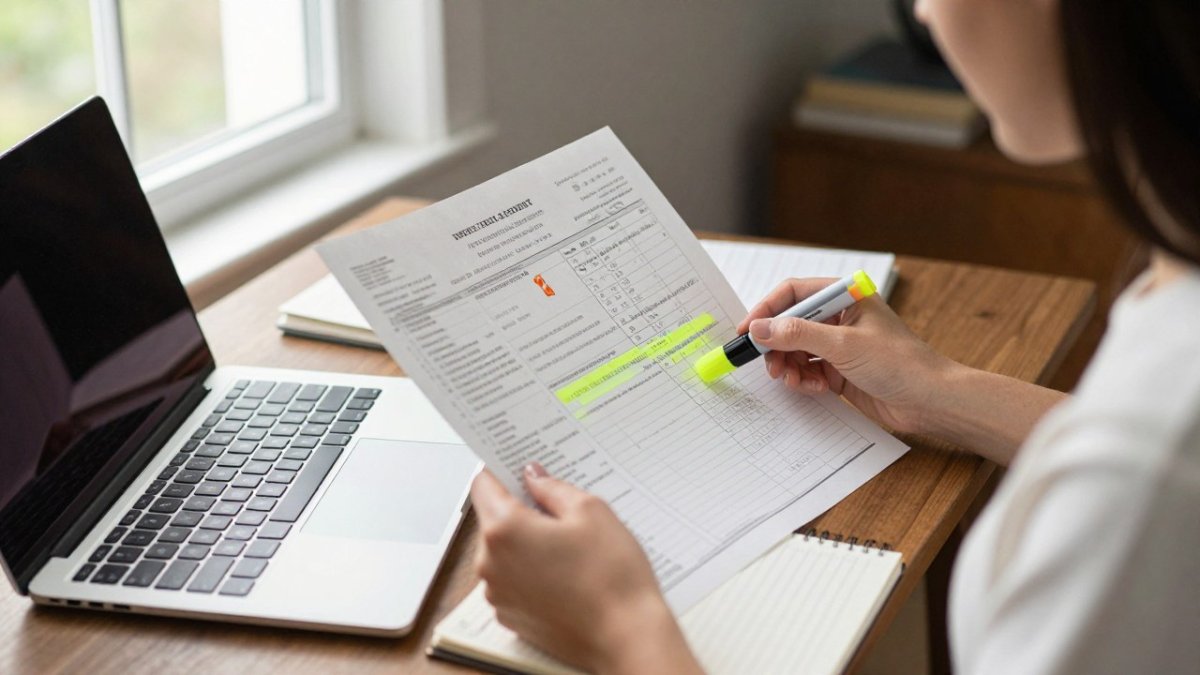
Woman at a desk reviewing property deeds and laptop for a title search
Follow this order:
- Pull the current deed and confirm the legal description
- Trace each prior deed back through the chain of title
- Search the grantor and grantee indexes under every prior owner's name
- Check mortgage records and note every release
- Search liens, judgments, and tax records
- Note easements and anything recorded against the parcel
Watch out: searching only the current owner's name is the most common beginner error. Claims filed under a prior owner's name still bind the property, and they will surface at the worst possible moment.
A Sample Chain of Title Walk-Through
Say the current deed names a buyer who took title in 2021. You pull that deed, note the grantor, then search that grantor as a buyer to find the 2014 deed. Repeat back to the original plat reference.
At each link, check three things: the grantor on the new deed matches the grantee on the old one, the legal description stays consistent, and every mortgage taken out has a matching release. A missing release is a cloud on title until proven otherwise.
How Long Does a Title Search Take?
A title search usually takes a few business days for a simple residential parcel and longer for commercial property or a broken chain. Turnaround depends on record access, not effort.
Factors that stretch the timeline:
- Records held off-site or not digitized
- Properties with many prior owners or subdivisions
- Active probate, foreclosure, or bankruptcy in the history
- County backlogs in indexing or document delivery
Rural parcels and properties with decades of transfers take the longest. If you need speed, order early and confirm what the county can deliver same-day.
Title Examination vs Title Opinion: What the Examiner Signs Off On
A title opinion is the written product of the examination. The examiner signs off on a conclusion about the state of the title, and that signature carries weight.
The opinion typically covers:
- Whether the chain of title is complete
- Each defect found and its severity
- Requirements to clear the title before closing
- Exceptions the buyer must accept
Title examination vs title opinion is a process-versus-paperwork split. The examination is the work. The opinion is the record of it. Attorneys often issue the opinion, while examiners may prepare the underlying analysis.
When the Examination Finds a Problem: Liens, Easements, and Clouds on Title
When the examination finds a problem, the fix depends on the defect type and on whether the item is a requirement or an exception.
Common findings and the typical path to resolution:
- Tax lien: pay it at or before closing, or negotiate a payoff letter from the taxing authority so the closing agent can disburse.
- Judgment against a prior owner: prove it was satisfied, released, or expired under the state's enforcement period; a satisfaction of judgment recorded in the county is the cleanest cure.
- Unreleased mortgage: obtain a satisfaction or release from the lender, or an affidavit of lost instrument if the lender is gone.
- Easement: accept it as an exception if it does not impair use; a utility easement along a rear lot line is routine, while an access easement across the building pad is not.
- Chain gap: obtain a corrective deed, an affidavit of identity to bridge a name variation, or a quitclaim from the missing heir.
- Probate or divorce in the history: obtain the court order distributing the property or the recorded instrument showing the transfer.
- Boundary or survey issue: order a new survey and, if needed, a boundary line agreement recorded against both parcels.
Buyers should get the examination report in writing and ask the examiner or closing agent to mark each item as a requirement or an exception. Requirements must be cleared before the policy is issued.
A practical decision path when an issue surfaces:
- Read the report and separate requirements from exceptions.
- Ask the examiner what evidence will satisfy each requirement.
- Request the cure documents from the seller, the lender, or the court, as applicable.
- If a cure will take time, ask whether closing can be delayed or whether an escrow holdback is acceptable to the lender and insurer.
- If the defect is disputed or the cure is unclear, get legal advice before signing.
Timing matters. A tax lien payoff can usually be arranged within days; a probate cure or a corrective deed can take weeks.
Where Title Examination Stops: Jurisdictional Limits and Title Insurance
Title examination stops where the record stops. It does not guarantee the property is free of unrecorded claims, and it does not transfer risk.
That gap is why title insurance exists. Underwriting is a separate step that weighs the examination's findings and prices the risk. The American Land Title Association sets the standard forms most policies use, and the Consumer Financial Protection Bureau explains what buyers should expect at closing.
Rules also vary by state. Recording practices, indexing systems, and who may issue an opinion all shift across county lines. An examiner trained on one state's records needs retraining before working another.
Build the Skills to Run Both Steps Yourself
Searching and examining are learnable skills, not credentials you have to inherit. The hard part is practice on real record systems, with someone who has done it for decades looking over your shoulder.
At Learn Title Searching, our courses are built on 40+ years in the title industry and taught by an instructor who authored the industry's leading training manual.
Start with the search side, master the chain of title, then learn to read what you find. Visit the Learn Title Searching website for course details and current enrollment information.
Frequently Asked Questions
Is a title search the same as a title examination?
No. A title search is the record-gathering step: someone pulls deeds, mortgages, liens, judgments, and tax records from county land records and assembles the property's ownership history and chain of title. A title examination is the review step that follows, where a qualified examiner reads those documents, judges whether each item is a real title defect, and states what must be cleared before closing. One collects the evidence, the other interprets it.
Can a regular person do a title search on their own property?
Yes, in most counties the underlying records are public and accessible in person or through an online portal. You can trace the chain of title, note recorded liens, and check tax records. What you cannot easily replicate is the examination judgment: knowing which easement is routine, which judgment actually attaches, and which gap in the chain needs a corrective deed. Doing the search yourself is a reasonable starting point; the interpretation is where training matters.
How long does a title search take?
A straightforward search on a single-family home with a clean, digitized chain of title often wraps up in a few business days. Timelines stretch when records are held in older bound volumes, when the property changed hands many times, or when the county requires in-person requests. Commercial parcels, new construction, and properties with prior foreclosure activity take longer because more documents need pulling and reconciling.
What happens if the examination turns up a lien or another defect?
The examiner lists it in the title commitment or report and states what is needed to clear title, such as a payoff and release of a mortgage, a satisfaction of judgment, a corrected legal description, or a quitclaim deed from a missing heir. The buyer should not close until each item is resolved or explicitly accepted in writing. Some defects are curable before closing; others get carved out as exceptions in the title insurance policy.
0 Comments