
Title Curative Process: Steps & Timeline
Table of Contents
- What Happens During a Title Curative Process
- Common Title Defects That Require Curative Action
- The Role of Title Search and Underwriting
- Title Curative Timeline: What to Expect
- Steps to Cure a Title Defect
- DIY vs. Professional Title Curation
- Marketable Title and Post-Curative Verification
- Frequently Asked Questions
Last Updated: Oct 1, 2026
What Happens During a Title Curative Process
A title curative process is the series of steps taken to fix problems with a property's ownership record. These problems, called title defects or clouds on title, prevent the property from being sold or refinanced. The curative process identifies the defect, gathers the right documents, and files corrections to clear the title.
Think of it like this: a property's title is a chain of ownership records. If one link in that chain is broken or missing, the whole chain becomes questionable. Title curation repairs those broken links.
The process typically involves four main phases. First, a title search uncovers the defect. Second, underwriting determines what documents are needed to fix it. Third, you file the corrective paperwork or take legal action. Fourth, the title company verifies the defect is cleared before closing.
Most title defects are fixable. The time and cost depend on how serious the problem is and how old the records are.
Common Title Defects That Require Curative Action
Not every title issue requires the full curative process. But some defects are serious enough that they must be cured before a property can change hands. Understanding what triggers curative work helps you know what to expect.
Recording Errors and Missing Signatures
Recording errors happen when documents are filed incorrectly at the county recorder's office. A deed might be recorded in the wrong county. A name might be spelled differently on two documents. A signature might be missing from a critical form.
These seem like small mistakes, but they create gaps in the chain of title. A buyer's lender will not fund a loan if the deed was recorded in the wrong place or signed by only one spouse when both owned the property.
Missing signatures are particularly common in older properties. Decades ago, recording standards were looser. A deed from 1975 might lack a notary signature that's required today.
Fixing recording errors usually requires an affidavit or corrective deed. You file a document that acknowledges the error and clarifies what actually happened. The county recorder then creates a corrected record.
Liens, Judgments, and Tax Issues
A lien is a legal claim against the property. Judgment liens come from court cases. Tax liens come from unpaid property taxes or income taxes. Mechanic's liens come from unpaid contractors.
These are serious defects because they give someone else a claim to the property's value. A buyer will not purchase a property with an active lien. A lender will not finance it.
The curative process requires proof that the lien has been paid or satisfied. You obtain a satisfaction document from the creditor and file it with the county. Once recorded, the lien is released and the title is clear.
Tax liens are trickier. If the property owner owes back taxes, the government may have a claim. You must verify the taxes are paid or work out a payment plan with the tax authority.
Clouds on Title and Chain of Title Breaks
A cloud on title is any document or claim that suggests someone else might have rights to the property. It doesn't mean they actually do, but the uncertainty makes the title unmarketable.
A common cloud is an old deed of trust or mortgage that was never formally released. The lender went out of business thirty years ago, but the document is still on record. Technically, that lender (or its successor) could claim the property.
Chain of title breaks happen when documents are missing between two recorded deeds. You can trace ownership from 1990 to 2000, then there's a gap until 2010. What happened during those ten years? Did the property change hands? Was there a divorce settlement?
Fixing clouds on title usually requires an affidavit explaining what happened. If the old lender is still in business, you get a formal release. If the lender is gone, you may file an affidavit of lost lien release or pursue a quiet title action.
The Role of Title Search and Underwriting
Before any curative work begins, a title search must uncover the defect. A title search is a detailed examination of all public records related to the property. It includes deeds, mortgages, liens, judgments, tax records, and court documents.
The title search goes back decades, sometimes to the original land grant (ALTA). The goal is to trace the complete chain of title and spot anything that doesn't fit.
Title underwriting is the next step. An underwriter reviews the search results and decides whether the title is marketable. A marketable title is one that a reasonable buyer would accept and a lender would finance. If the title has defects, the underwriter identifies what must be cured.
The underwriter prepares a title commitment, which is a promise to issue a title insurance policy once the defects are cleared. The commitment lists every issue that must be resolved. This list guides all curative work.
Without a thorough title search and underwriting, you might miss serious defects.
Title Curative Timeline: What to Expect
The timeline for a title curative process depends on how serious the defect is. A simple recording error might take two weeks to fix. A quiet title action can take three to six months.
- Weeks 1-2: Title search completed and defect identified
- Weeks 2-3: Underwriting review and curative requirements determined
- Weeks 3-5: Gather documents, obtain creditor releases, or prepare affidavits
- Weeks 5-7: File curative documents with the county recorder
- Weeks 7-8: County processes documents and updates records; title company verifies clearance
Steps to Cure a Title Defect
The curative process follows a clear sequence. Each step builds on the last. Skipping steps or doing them out of order delays closing and costs more money.
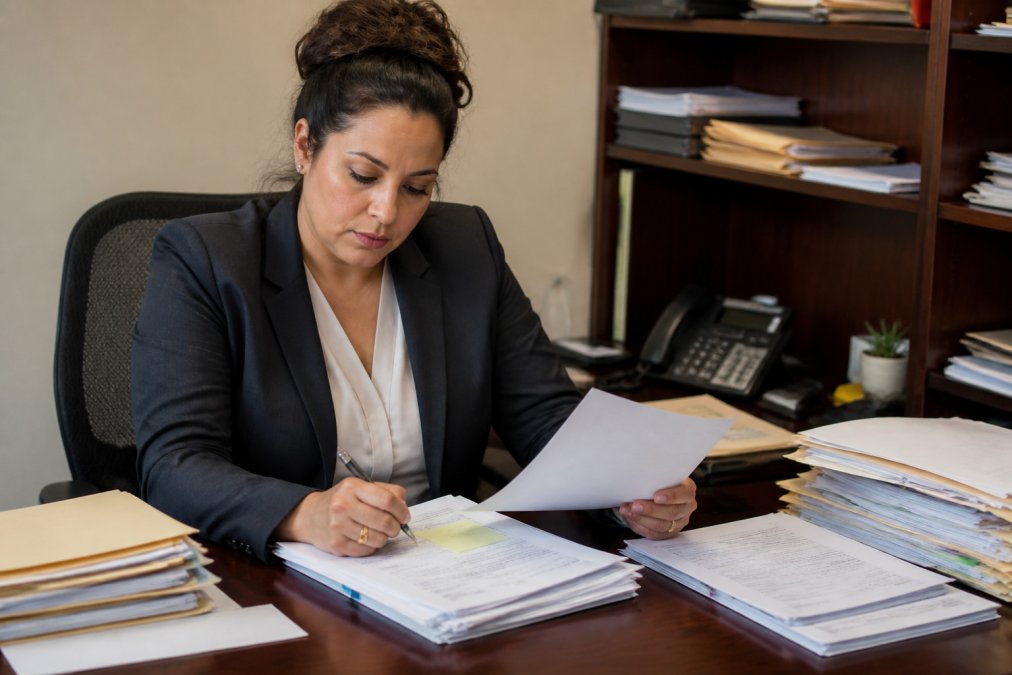
Real estate professional reviewing property deeds during the title curative process at a desk
Step 1: Document the Defect
The first step is understanding exactly what the defect is. Don't assume you know from a phone call or email. Get the title commitment in writing. Read the specific language about what must be cured.
Common defect descriptions include:
- Missing or unclear signature on a deed
- Lien not released or satisfied
- Judgment still showing as active
- Property taxes unpaid for a specific year
- Deed recorded in wrong county
- Name variations (John Smith vs. J. Smith)
- Easement or encroachment from neighboring property
- Probate or heirship issues
Step 2: Gather Required Documentation
Once you know the defect, gather the documents you need to fix it. The title commitment usually tells you what's needed.
For a released lien, you need:
- The original lien document
- Proof of payment
- A release or satisfaction form signed by the creditor
For a missing signature, you need:
- An affidavit from someone with knowledge of the transaction
- Proof that the person who should have signed is deceased or unavailable
- Notarization of the affidavit
For a tax issue, you need:
- A tax clearance letter from the county assessor or state revenue department
- Proof of payment
- A tax lien release
Step 3: File Curative Documents or Quiet Title Action
Once you have the documents, you file them with the county recorder. Most curative documents are straightforward: releases, affidavits, corrective deeds, or tax clearance letters.
- The original creditor cannot be found
- An heir refuses to sign a release
- An old lien was never formally released
- There's a dispute about who owns the property
Step 4: Obtain Title Commitment Clearance
After filing curative documents, the title company updates its search. It confirms that the defect has been cleared. This confirmation is called a title commitment clearance.
DIY vs. Professional Title Curation
You can attempt some curative work on your own. But most defects benefit from professional help. Knowing the difference saves money and prevents mistakes.
Simple defects you might handle yourself:
- Getting a mortgage release from a lender you can easily contact
- Obtaining a tax clearance letter from the county
- Filing an affidavit if you were present at the transaction
Defects that need professional help:
- Quiet title actions (require a lawyer)
- Complex chain of title breaks (require a title abstractor)
- Probate or heirship issues (require an estate attorney)
- Judgment liens or tax liens (often require negotiation with government agencies)
Marketable Title and Post-Curative Verification
A marketable title is one that a reasonable buyer would accept and a lender would finance. It doesn't have to be perfect, but it must be free of serious defects.
Post-curative verification involves:
- Reviewing the recorded curative documents
- Confirming they were recorded in the correct county
- Checking that all required signatures and notarizations are present
- Verifying that liens, judgments, or tax issues have been released
- Ensuring the chain of title is now complete
Frequently Asked Questions
What are the most common title defects that require curative action?
The most frequent defects include missing signatures on deeds, recording errors where documents weren't filed correctly, unpaid liens or judgments against the property, and breaks in the chain of title. Tax liens, easements not properly disclosed, and probate issues from inherited properties also commonly require curative work. A title search reveals these defects before closing, allowing time to resolve them.
How long does a title curative timeline typically take?
Simple defects like correcting a recording error or obtaining a satisfaction of mortgage may resolve in 2-4 weeks. More complex issues, such as quiet title actions or clearing multiple liens, can take 2-6 months or longer. The timeline depends on how quickly you can locate responsible parties, obtain signatures, and file necessary documents. Working with a title professional can accelerate the process significantly.
Can I close on a house if the title has defects?
No. Lenders require a marketable title before funding a mortgage, and title insurance companies won't issue a policy until defects are resolved. Closing without clearing title defects exposes you to legal disputes, loss of ownership rights, and financial liability. The curative process must be completed and verified before the closing date, which is why identifying defects early is critical.
Should I hire a professional to handle title curation, or can I do it myself?
Minor issues like obtaining a satisfaction of mortgage or filing an affidavit of heirship may be manageable independently if you're detail-oriented and familiar with public records. However, quiet title actions, complex chain of title issues, and multi-lien situations typically require an attorney or experienced title abstractor to navigate properly. Professional intervention reduces delays, ensures documents meet legal requirements, and protects your investment in the property.
0 Comments